We use cookies to make your experience better. By browsing our site you agree to accept all cookies. Learn more.

The Essential Gluten-Free Baking Guide
December 02, 2019
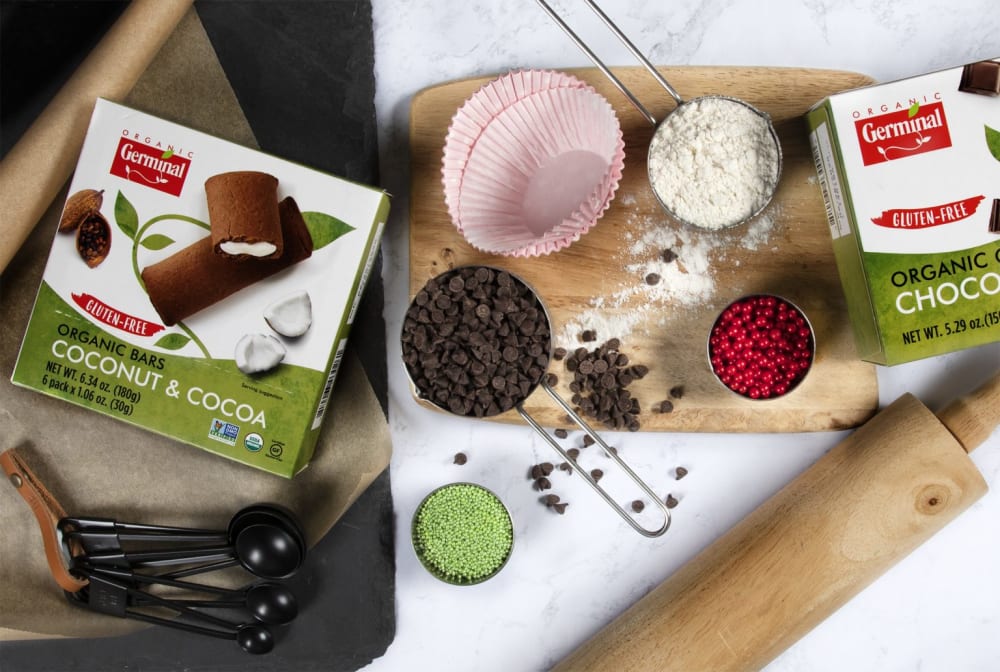
Whether it’s part of a New Year’s resolution, or a goal such as trying to get in beach body shape, many consumers turn to a gluten-free diet to help keep a healthy lifestyle. Currently there are 3.1 million Americans following a gluten-free diet for personal and medical reasons according to Forbes. Business consulting firm Grand View Research tabulated all the numbers and their data shows the gluten-free market size has been estimated at a whopping $17.59 billion in 2018 (and still growing).
While there are many gluten-free food products on the market today, the category in hot demand is baked goods, according to Allied Market Research. With the continued popularity of baking competition shows and Pinterest’s pretty pictures promoting a gluten-free lifestyle, it’s not surprising that consumers want to make their own gluten-free baked creations at home.
Gluten-free baking can be challenging the first time though, as these recipes use their own batch of ingredients not found in traditional full gluten baking. In fact, not all “gluten-free” flours can be used for all types of baked goods, making this a hard landscape for customers to navigate. Complicating the recipes even further, the ratios are not always 1 to 1, so customers may have to do some math to get it just right. And, baking is a science. Bakers can’t just add a dash of this and a splash of that to adjust a recipe on the fly.
Get yourself familiar with gluten-free baking ingredients and gluten-free baked goods you offer in your assortment. It’s the easy recipe for increased brand loyalty and repeat business.
Flour – the Foundation
Unlike the gluten world where all-purpose flour is a staple, there is no one gluten-free flour used for all recipes. While some brands offer 1-to-1 blends, most gluten-free recipes call for a combination of flours. Here are the basics:
- Almond Flour: Ground almonds; great for scones, cakes, cookies, tart crusts. Works best when paired with drier flours.
- Coconut Flour: Dried coconut meat; very absorbent and often needs extra egg whites. Best for cookies, cakes, and breads.
- Rice Flour: Comes in 5 varieties; excellent for breads, muffins, and cakes. Requires resting time for batter.
- Potato Flour: Made from whole potato; adds sweetness and moisture to yeast breads and biscuits.
- Cornmeal: Ground corn kernels; adds texture but requires another flour for structure.
- Corn Flour: Finer ground corn; used with stabilizers in breads, cookies, muffins, and waffles.
- Soy Flour: High-protein flour; works best in brownies and muffins with bold flavors.
- Buckwheat Flour: Despite its name, gluten-free; ideal for breads and pancakes, though flavor is strong.
Starches and Gums – the “Glue” that Keeps it Together

Removing gluten means losing structure. Stabilizers step in to provide elasticity and texture:
- Xanthan Gum: Adds rise, stability, and texture. Some may have sensitivities.
- Potato Starch: Adds moistness and smooth texture to baked goods.
- Cornstarch: Adds texture but can make products rubbery if overused.
- Tapioca Starch: Adds elasticity; too much can make baked goods rubbery.
- Guar Gum: Adds stability; may need doubling in acidic recipes. Often paired with xanthan gum.
- Arrowroot Starch: Adds lightness; ideal for cakes, cookies, and muffins. Also serves as vegan egg substitute.
Getting into the Gluten-Free Mix
Gluten-free is a lifestyle that continues to gain popularity. Food manufacturers are keeping up with the demand by introducing new products all the time — particularly in baked goods. With the gluten-free trend tied into the desire for cleaner eating, we’re going to see more consumers baking their own creations.
Be a resource on their health journey while creating brand loyalty to your shop. Bookmark this guide so you can help customers navigate purchases with confidence.
Whether you offer pre-made gluten-free mixes, pre-baked products, or baking ingredients, market them in a dedicated section with clear signage. Educate your staff so they can serve as knowledgeable guides for your customers.

Share on Facebook

Share on X

Share on LinkedIn
Comment(s)
Recent Posts